We have received a number of inquiries from outside of the Diocese about where to send donations for Disaster relief. The first way to do this is to donate directly to the Bishop’s Fund for Disaster Relief. This money will go directly to helping our parishes and Honey Creek in meeting their deductibles as they repair damages to their properties, which is a needed type of aid that is not covered by other grants. Once those initial costs are covered, any leftover donated funds will be used for additional assistance as needed.
The damaged sanctuary of St. Bartholomew’s in Savannah.
Donations can be sent by check to the diocesan office(18 E 34th Street, Savannah, GA 31401) or by texting “EDOG Relief” to 73256 or by clicking this link for the Realm giving portal: https://onrealm.org/EpiscopalDioces91807/-/form/give/relief
The second way to provide aid across the Diocese is to give to Episcopal Relief and Development. ERD provides grants to dioceses to help them send direct aid to the most vulnerable in their communities impacted by this disaster. Donations can be sent to ERD’s Hurricane Relief fund by clicking this link: https://www.episcopalrelief.org/what-you-can-do/give/donate-now/individual-donation/
Assessing Damage and Assisting Neighbors
Across the many towns heavily impacted by Hurricane Helene, we know of significant damage to four churches and a heavy clean up needed at Honey Creek. Beyond this, many of the communities of the Diocese of Georgia are overwhelmed by the scale of the damage to homes, businesses, and infrastructure. The recovery will be a long one in towns including Valdosta, Douglas, Vidalia, Louisville, Swainsboro, and the Augusta area.
The photo shows a downed tree at Christ Church in Augusta, where the building was spared and the Byllesby Center is continuing to serve the community.
Damaged Church Buildings
The churches at Christ the King in Valdosta, St. Andrew’s in Douglas, St. Bartholomew’s in Savannah, and the parish hall at Good Shepherd in Swainsboro all suffered in the storm. This is in addition to minor damage to many other church buildings as well as so many trees that need to be cut up and removed from church property.
While the insurance will cover much of the cost of the repairs, the deductible in a “named storm” like Helene, is 2% of the value of each of the buildings with a loss. This leaves the congregations with $8-10,000 deductibles or more instead of the usual $1,000. This is a heavy burden the Diocese will lighten. Some of the funds given to our disaster response will assist with this need.
This photo shows one of the two pine trees that crashed through the roof of the parish hall at Good Shepherd in Swainsboro.
Honey Creek Update
Our retreat center was largely spared damage to the buildings. The exceptions are roof damage to the Dock Study building and a pine tree that fell on Jonnard Cottage, leaving minor damage to the roof. But there are a lot of trees down all over the property. Thanks to the Episcopal Camps and Conference Centers network, we will have 20 volunteers from the Diocese of South Carolina’s Camp St. Christopher working on the grounds on Thursday and Friday. If you would like to join their efforts, there is plenty of work to go around. Let our Executive Director, Dade Brantley, know you will be there (dade@honeycreek.org).
The photo shows the pine tree that landed on the corner of the roof at Jonnard Cottage, without breaking through the ceiling.
Assisting Neighbors
There are so many efforts underway, that we can’t report on them all, but across the Diocese, congregations are offering assistance to their communities. This includes the Byllesby Center in Augusta providing daily hot meals. yesterday they fed more than 150 people, while also offering lots of water as the county has a boil water advisory and many are not able to do so without power. Saint Paul’s in downtown Augusta has been opening the church to provide electricity and wifi in a rare Augusta building with air conditioning. They have also offered a meal, with chicken chalupas and ham gumbo served yesterday.
Photo of volunteers stacking up bottled water for distribution at the Byllesby Center.
An Episcopal Relief and Development Grant
Bishop Logue has secured a grant from Episcopal Relief and Development, which will assist in our congregations providing direct assistance to our neighbors in the greatest need. Additional grant funds are available from ERD if we use up this grant and are still responding to individuals and families whose lives are impacted by Hurricane Helene.
If your congregation is prepared to assess the needs and distribute money in the form of gift cards to those with a verified need, please contact Canon Loren Lasch (llasch@gaepiscopal.org). The money may also be used to purchase items like bottled water for distribution.
This crumpled roof covering an aged flat roof is over Christ the King in Valdosta.
This survey is a second step, following the 10 in-person and online listening sessions, which with 215 taking part, went very well at identifying some key themes for our work in the coming years. After the survey, our consultants and the committee will offer feedback to our diocesan convention where we will also work further on the themes. This process is designed to offer multiple opportunities to help shape our visions, goals, and strategies. Here is more about what we seek to accomplish with this strategic planning process.
By his great mercy he has given us a new birth into a living hope through the resurrection of Jesus Christ from the dead.” -I Peter 1:3
New life in Jesus does not offer a vague, uncertain hope that things might one day improve. Instead, as followers of Jesus, we have the sure and certain knowledge that Jesus is with us now and always. The presence of the living God offers both comfort and challenge. We are called not simply to have hope, but to take actions that reveal the living hope within us. Living hope is embodied in our actions.
The Strategic Planning Process we are entering into this year is not just about creating a sound business plan for the Diocese of Georgia, even though we should expect our vision of how we are to be and what we are to do will make sense from that perspective. This process is primarily intended to help the people of the Diocese discern how the Holy Spirit is leading us into the future. In asking, “What does fidelity to Jesus look like in this moment?” we can confidently look to the Spirit to guide us into new ways of embodying our living hope.
In the visits we make to every congregation of this diocese, Victoria and I see that the resurrection we long for is already happening. We meet people new to the Episcopal Church who have found themselves connecting to their faith in Jesus in Word and Sacrament in the community of their Episcopal Church. We routinely meet people of every age and stage of life who are as grateful as we are to have found a home in this corner of the vineyard.
In addition, I see the new life taking root in places where parishes have begun to work with other Episcopal congregations as well as ecumenical partners. When we move outside our red doors to engage with our neighbors and to work with other churches, the Spirit shows up. When we live in hope, we give hope to others. New life is already among us. The question is not the one that faced Ezekiel, “Can these bones live?” The answer to that is clearly, “yes” based on the evidence around us. Our call is to join with what God is already doing as we practice resurrection. This is the Christian call to die to what has been to let Christ be born in us anew, as individuals and as a Diocese. We strengthen our faith and deepen our trust in Jesus when we move from having hope to living hope.
+Frank
The Rt. Rev. Frank S. Logue, Bishop
Strategic Planning Committee Bishop Logue has named eleven members of the Diocese with diverse perspectives to work with our consultants on this planning process characterizing them to Diocesan Council in a recent meeting: The two teens on the team have experience in their own congregations, diocesan youth programs, and with the churchwide Episcopal Youth Event. Five additional lay persons bring their views from a variety of sizes of congregations and sizes of communities they serve. The four clergy likewise bring a depth of insight from the different places they serve. Chairing this committee is Carey Wooten, who has gained a broader view of the Diocese and its ministries while heading our Leading with Grace training.
Billy Alford, Dean Emeritus of Augusta Amy Ariail, St. Thomas in Thomasville Bob Baranko, St. Patrick’s in Albany Jody Grant, Our Savior in Martinez Cam Mathis, St. George’s in Savannah Dwala Nobles, Good Shepherd in Brunswick Becky Rowell, Christ Church Frederica Sandy Sandbach, Christ Church in Valdosta Kelly Steele, St. Peter’s in Savannah Charles Todd, Trinity in Statesboro Carey Wooten, Calvary in Americus (Chair)
Summary: I am writing to let you know that the Standing Committee has concurred with my decision to sell our current Diocesan office on 34th Street in Savannah and to move to a new Episcopal Center in the former St. Michael and All Angels building on Washington Avenue and Waters Avenue in Savannah. This move will eliminate all debt on our balance sheet while adding more than $1 million in investments to support the diocesan budget and will have your bishop and diocesan staff serving from an office in a place offering greater accessibility where other ministry is also happening.
The Former St. Michael and All Angels’ Property When the Vestry of St. Michael and All Angels in Savannah voted to close the parish and give the keys to me as bishop as of July 1, 2023, we continued the ministries taking place, that were serving more than 350 people each week, while deciding what to do with the facilities. We did not want to lose this prime location in Savannah, but a more serious concern, not immediately evident, was the burials on the grounds and in the courtyard of the church. Working with the Standing Committee, we opted to sell the rectory next door, which had been a plan first put forward by the parish vestry. That sale is funding our catching up on all of the deferred maintenance in the church building including a new roof and addressing several serious issues raised by structural engineers. We were looking for non-profit groups to lease the space on the second floor of the parish hall in order to cover the cost of maintaining the physical plant. We found some interest, but no tenants. During this time, the Rev. David Lemburg provided a priestly presence to the ongoing ministries, and Mrs. Judy Naylor-Johnson continued to assist with the administration of the space, as Canon Katie Willoughby and Mr. Daniel Garrick, our Canon for Administration and Assistant Administrator, went above and beyond to make this work. That’s when the Aha happened.
The Aha Moment I was walking the space soon after our Presiding Bishop-Elect announced that he was going to forgo the expensive installation liturgy at Washington National Cathedral. I looked at the rooms again wondering why we could not find a tenant and it dawned on me that the space would best serve the Diocese. I wondered why it had not occurred to me before as it seemed obvious in that moment. I am grateful for Presiding Bishop-Elect Sean Rowe’s leadership, which helped me envision a decision that was much better stewardship for the Diocese of Georgia. I immediately engaged with the Standing Committee on this new possible direction. Canon Willoughby worked with our project manager for the site on the costs of making the new location work for our offices as I considered the costs and benefits of making this move.
The Details The current Diocesan House is a beautiful building that is costly to maintain, in addition to other shortcomings. The layout of the building has limited accessibility, especially for people with disabilities. The building itself is not accessible, as navigating stairs is required to enter, and the first-floor layout precludes the holding of confidential conversations as there are no doors on that level. While it has been a good site for the bishop and staff since 2018, moving to another, more workable ministry site provides opportunities to be more accessible, welcoming, and outreach-focused.
I have remained concerned about the debt the Diocese has maintained on its balance sheet. When I was elected bishop, the Diocese of Georgia had the much-discussed Honey Creek debt that we paid off in full in December 2022. We also had notes in our audits of internal loans from our investments of $400,000 used to buy our current office, and $115,000 for the Campus Ministry House in Statesboro. Two recent bequests allowed us to pay off the debt on the house near Georgia Southern and to reduce the debt on our offices to $200,000. The sale of our offices on 34th Street will clear that remaining note on debt on our audits while yielding more than $1 million to invest with the Board of the Corporation so that an appropriate annual draw can increase the diocesan budget. This wonderful windfall from investing in this downtown Savannah property in 2018 will assist in realizing the vision that emerges in our strategic planning process now underway.
The benefits of the new location include having more ample parking and better, more accessible meeting spaces for diocesan gatherings while maintaining existing ministry services in the area including operating a food pantry and providing space for community groups to gather. Additionally, the worship space will become a diocesan chapel that can still be used by the Episcopal Church of the Epiphany, while also being available when helpful to the Diocese. Mostly, this move emphasizes ministries happening concurrently in the same space, while offering the potential for much more.
This decision is about focusing on what matters most. Worship is the heart of ministry and so all of our congregations matter. The work of your bishop and diocesan staff is also important ministry as is feeding our neighbors in need and otherwise engaging with the community around us. Having these differing ways of living into our faith in Jesus all present in our new Episcopal Center matters. We are doing this in a way that eliminates debt and increases our investments in the Board of the Corporation as well as our investments in our neighbors. I believe this move is an important witness that will advance the Gospel.
A new policy of the Diocese of Georgia, as announced in January, calls for the Secretary of Convention to publish a list of eligible voters for our 120 days before the Diocesan Convention starts. The Standing Committee approved our beginning this best practice as a part of their setting policies and procedures for a bishop election years before we need to follow the full process:
Other dioceses have faced serious conflict over who can vote in a bishop election. To avoid those concerns when we elect a new bishop at some point in the future, the Standing Committee’s policy states that the Secretary of Convention shall annually publish the number of delegates for each congregation and the list of the canonically resident clergy entitled to a vote in keeping with the canons of the Diocese. Acting in her role as the Secretary of Convention, Canon Katie Willoughby is publishing here those lists 121 days prior to the diocese meeting in Tifton.
Delegate Count
The Canons of the Diocese of Georgia approved in 2022 define the delegate count as follows: Every Congregation shall be entitled to send lay delegates to convention with the number of delegates determined by the Average Sunday Attendance (ASA) of the congregation as “reported on the previous three parochial reports extant.”
2 delegates for congregations with 99 or less in ASA
3 delegates for congregations with 100-199 in ASA
4 delegates for congregations with 200 or more in ASA
Clergy serving under the jurisdiction of the ecclesiastical authority of a diocese (typically the diocesan bishop) are canonically resident in that diocese. All deacons and priests canonically resident on the list linked below are entitled to seat and voice in every convention of the Diocese. Our canons require that those voting in our conventions, including a bishop election, have a current, active role in ministry within the Diocese
Canon I.1.3 of the Diocese of Georgia’s Constitution and Canons offers three ways a canonically resident member of clergy may have vote in convention. A member of clergy must be:
ecclesiastically employed within the Diocese; or
continually exercising clerical functions in some Congregation within the Diocese; or
exercising a ministry specially approved by the Bishop.
In announcing the list to the clergy in a prior email, Bishop Logue clarified point number three above saying, “I am of the firm conviction that someone serving as a supply priest meets that last test as does someone serving as a peer coach in our coaching network as could other service in the Diocese whether compensated or not. On the current attached list, supply priests on whom we absolutely rely for our common life are the prime reason I list someone as exercising a ministry specially approved by me.”
Bishop Logue added, “The main reason for not having a vote is that the person is serving outside the Diocese as often happens in retirement, or they are serving as an associate in another diocese during a first call out of seminary while maintaining their connection here. The second reason is that the member of clergy has needed to fully retire for health or other reasons who is not, with only very rare exception, regularly serving in a church.”
Address any concerns with the status of canonically resident clergy to the President of the Standing Committee, the Rev. Walter Hobgood. Contact the diocesan office through Canon Willoughby above for an email address for him.
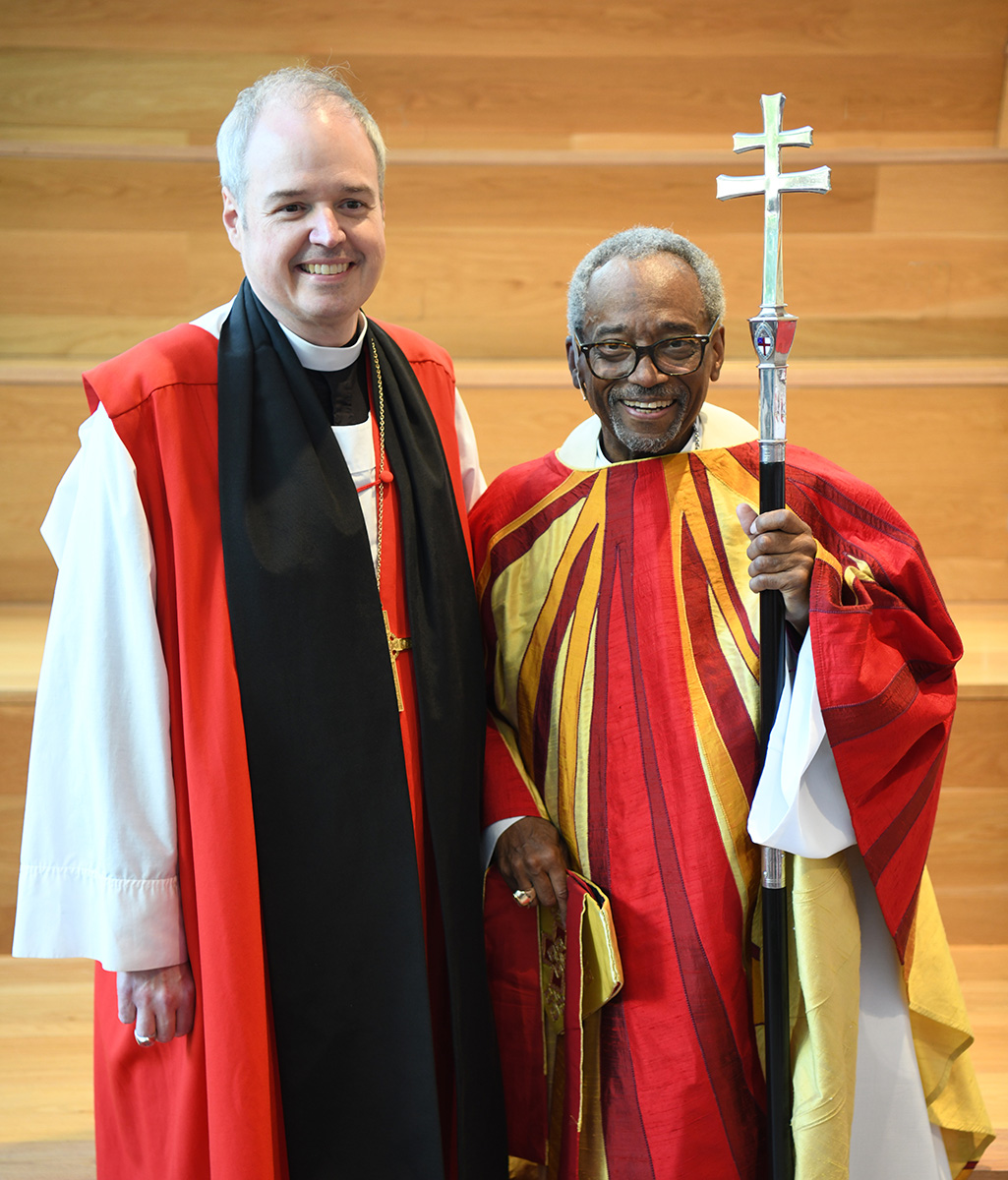
In a first-ballot election among a slate of five well-qualified candidates, the bishops of the Episcopal Church elected the Rt. Rev. Sean Rowe to become the next Presiding Bishop. At 49, he is the youngest person chosen to lead our church. I met Sean in the fall of 1997 when we both arrived at Virginia Theological Seminary. At 22, he was the youngest person in our class of more than forty seminarians. He would go on to be the youngest bishop in the Anglican Communion for many years after being elected on the first ballot at the age of 32 from a slate of four well-qualified candidates seeking to be the Bishop of the Diocese of Northwest Pennsylvania. When you get to know Sean, the pattern is not surprising.
He is the one so many of us in the House of Bishops go to for counsel. By the time of his installation as Presiding Bishop, he will have served for 17 years in this unique call. He has a pastor’s heart and knows the role well. He loves our church and yet sees how we must change to respond to the challenges of decreased membership, giving, and attendance. Yet, he is not interested at all in the institution for its own sake, but for the sake people who need to know Jesus.
In seminary, I immediately came to respect his keen intellect, deep faith in Jesus, and his often surprising sense of humor. In a homiletics class, we each found our very different voices as preachers alongside one another. While there is only one Bishop Michael Curry, Sean will always seriously engage with scripture in a sermon that challenges you or challenges our church. The sermon he preached for the closing Eucharist of the 81st General Convention is a perfect example of his seeking to put faith into practice: Sermon for Closing Eucharist
Sean said, “And finally, what about our idolatry of structures and practices that exclude and diminish our witness? We have to get it together. That’s going to mean laying some things down.” By the end of the day, an announcement went out to the church that our Presiding Bishop-Elect canceled the big, expensive installation at Washington National Cathedral opting for a small service in the chapel of our Episcopal Church Center that will be broadcast to the church online.
The bishops discerned this call and it was a surprising one for outside observers, but the spiritual discernment we did led us to see Bishop Sean Rowe as the right Presiding Bishop for the nine years ahead. He is signaling bold leadership saying “God is calling the Episcopal Church into a new future.” What you can know about our new Presiding Bishop is that he is a good man, a faithful pastor, and a devoted follower of Jesus who appreciates what our church can offer a lost and hurting world too much to let us languish.
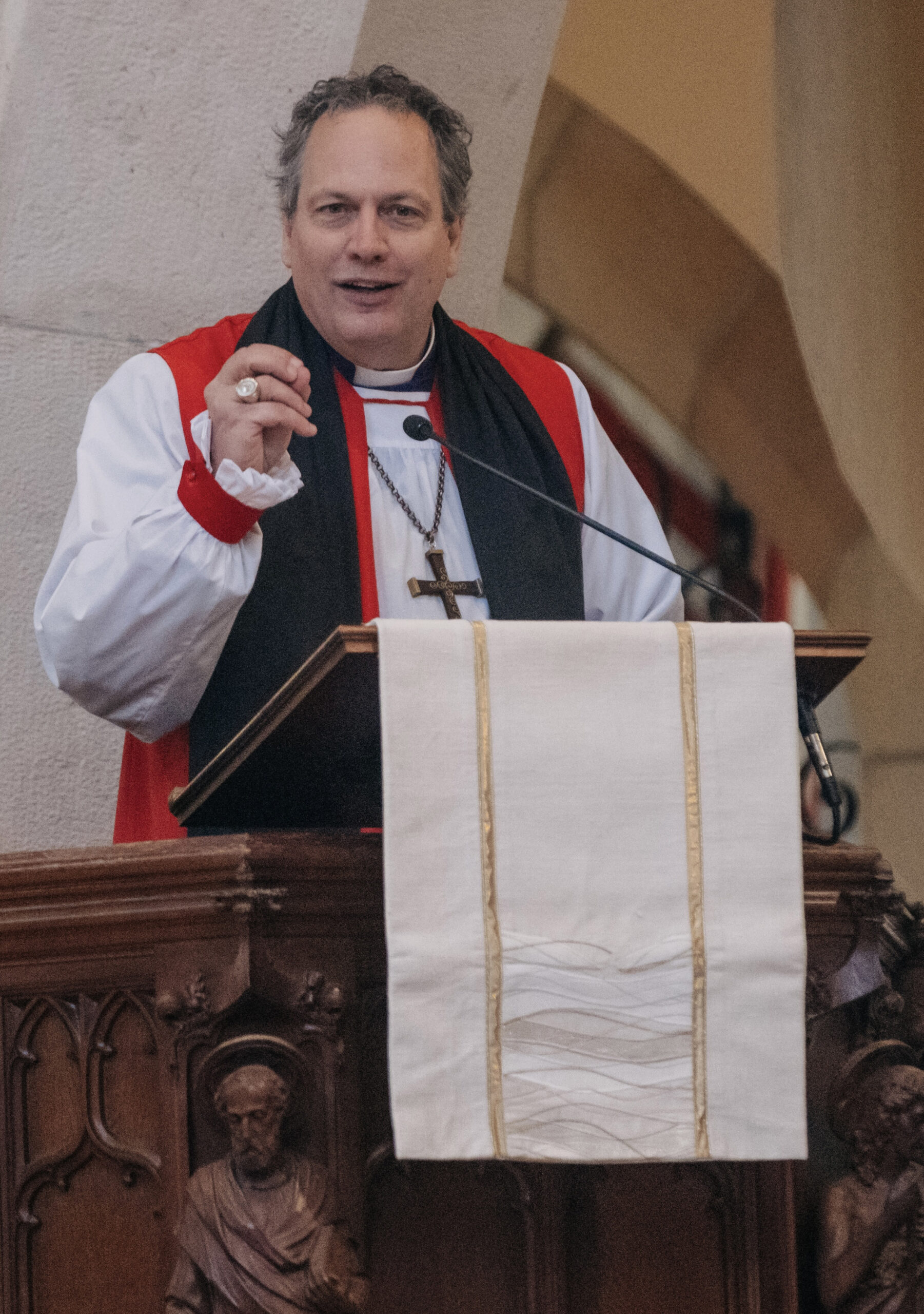
The Rt. Rev. Frank S. Logue preached this sermon for the St. Luke School of Theology Commencement at Sewanee: The University of the South in All Saints’ Chapel on May 10, 2024.
Working Together 1 Corinthians 3:5-11 and John 4:31-38
The hours of lectures, reading, and taking tests are so very long.
The days can also pass slowly as you toil into the night studying, researching, and writing.
Yet, the years of working toward an advanced degree are surprisingly short.
After what feels like a very long time, that somehow passed quickly, you discover that all the other lemmings have jumped off the cliff and your turn is up. The DMin thesis has been defended or the GOEs are done or, in whatever way applies to you, every box has been checked and you need only pick up your degree to move forward in a new season of ministry enriched by your time on The Mountain.
You, the School of Theology Class of 2024, have been gifted with a very different experience than many fellow alumni. Your decision to pursue ordination or advanced studies was made in the midst of a global pandemic. For those of you who are MDiv students, unlike the classes immediately before you, you were permitted to worship in the Chapel of the Apostles in your junior year. Masking precautions remained and while you were living into the EQB ideal of “how good and pleasant it is when kindred live together in unity” you did so without sharing the chalice in the Eucharist.
You have not only learned of how the experience of the Babylonian Exile formed the descendants of Abraham, Isaac, and Jacob, you also experienced exile from Hamilton Hall for the past year and a half. Because of, or in spite of, these challenges, you have relied on each other, your professors, and others in your circle of support which has given you a key to ministry: teamwork. You know this well as you have supported one another.
As we read in the first letter to the Christians in Corinth, “we are God’s servants, working together.” Ministry is inherently teamwork where we work alongside others and build on their work. More importantly, even the team of people does not work alone as “neither the one who plants nor the one who waters is anything, but only God who gives the growth.”
Jesus puts it this way in our reading from John’s Gospel, “‘One sows and another reaps.’ I sent you to reap that for which you did not labour. Others have laboured, and you have entered into their labour.”
The gift nestled in our propers for this commencement is clarity that while we long to see lives changed by the Good News of Jesus, that metanoia does not depend on us alone or even on us primarily. Everything that needs to be done has already been done by Jesus. The grace of someone experiencing a conversion of heart and mind depends neither on dazzling homiletical prowess nor on gorgeous liturgies. The metamorphosis we long for people to experience is Holy Spirit work. You can’t earn it. You can’t deserve it. But you do get the immense joy of sharing this love of God with others.
This overwhelming, audacious Good News is life-giving. Those with whom you minister have been fed a steady diet teaching them that they are not enough. Casual cruelty on the elementary school playground or betrayal by friends in our teen years, and all the experiences of a lifetime when others see us with harsh judgment, can shake anyone. Many people know the feeling of never having measured up. You and I know that as well in our own lives. But we also know the loving care of the Holy Trinity. We know that while there is much we can do to amend our lives, no one needs to be taller, thinner, prettier, funnier, fitter, smarter, younger, more mature, or anything other than the person God made them to be in order to be loved by the creator of the Cosmos. If this awareness feels beside the point in a world on fire, remember that failure to see every other person as a sibling is at the root of all the pain and suffering we do see.
This is not to do away with our knowledge of sin and our need for redemption. I am not sweeping aside the need for repentance and amendment of life. Instead, I want to remind you that your ministry is in communities where so many people need the grace, mercy, and compassion we have found in Jesus as much as a thirsty person needs water.
Yet, we are not immune to the cult of earning and deserving. If your goal is to be successful in ministry, know that this is a never-ending race set at an unsustainable pace. Someone will always seem to be effortlessly thriving in ministry. Another will get an amazing call to some plum position. Life, especially life in the church, can become yet another place where we feel we never measure up. The antidote to this poison of perfectionism is coming to know deep in your bones that only God can give the growth.
If neither Apollos nor Paul are anything, who are we to seek to be the greatest of lay leaders, deacons, priests, and bishops. The church has suffered much from those who want to be a Great Bishop and no less from those who want to make their mark as a scholar or a pastor, priest, and teacher. This is why the word from scripture about working together matters. We work together with lay leaders, clergy colleagues, and most importantly the Holy Spirit. Your ministry is not now, nor will it ever be, about you. Our common call is not to achieve great things for God. Our common call is to faithfully follow Jesus. In any key decisions in ministry, ask the question of what faithfulness to Jesus looks like in this moment. Respond as well as you can with what you know at that time and trust God with the rest. This is the life of faith and so it is the life of ministry.
To this call to faithfulness, I need to add counter-intuitive wisdom from G.K. Chesterton, “If a thing is worth doing, it is worth doing badly.”
I say this to describe what fidelity looks like in the real day-to-day work of serving God through the church: “If a thing is worth doing, it is worth doing badly.” There is much in ministry that is worth doing and doing well including prayer, reading scripture, teaching classes, leading Bible studies, planning liturgies, giving sermons, visiting the sick and shuts ins, being with those at the end of their life, then caring for their families after a death, not to mention stewardship campaigns and budget meetings. All of these and so much more need you to do them to the best of your ability. But if they are worth doing well, they are also worth doing poorly.
For example, you must have spiritual disciplines which you maintain in order to nourish you from the deep springs of living water which they offer. But when you have two funerals during the week and Sunday is coming fast while you are trying to finish preparing the confirmands for the Bishop’s visit, it is okay if morning devotions replace Morning Prayer, or you intercede for those on your prayer list as you drive to the funeral home. Be gentle on yourself, not everything can be done equally well every day. Sermons need more time than seems possible, and sometimes you simply won’t be able to give them all they need. As your liturgics professor has taught you, “Done is better than good.” The Holy Spirit will bless what you can do that week. Faithfulness is the goal, not greatness. Don’t let your idea of the perfect prevent the possible.
The church has suffered enough from narcissists with a messianic complex. You and I have been wounded and we have experienced healing, but we are not The Healer. Those of us who want to do this work over the long haul without getting close to that narcissistic terrain need people with whom we can share our real struggles. Get a WhatsApp, GroupMe, or private Facebook group for your sake and the sake of the church. A therapist, a spiritual director, a colleague group, activities and friends not connected with the church—these are essentials rather than options—as are spiritual disciplines that nourish your faith day-by-day.
Being gentle on yourself is not an excuse to drop your private prayers and devotions and leave the reading of scripture to sermon prep alone. That is not what steadfast devotion looks like. Yet the ebb and flow of ministry means doing all things well will always be beyond your grasp.
“If a thing is worth doing, it is worth doing badly,” also, quite surprisingly, applies to love. The most important part of serving God in the Church is to love your people, those in your congregation and those in the community around your church. This is at the heart of any call to follow Jesus who distilled all the Law and the Prophets to “Love the Lord your God with all your heart, mind, soul, and strength, and love your neighbor as yourself.”
Loving your neighbor includes everyone made in the image and likeness of God, so it certainly includes the person who is chairing the parking lot conversations that have turned far less than charitable. Loving your people is everything, and it is, therefore, worth doing badly on the days when you can’t love them perfectly. Love is an act of will, so choose to love them even when it is hardest to see the image of God within them. Jesus gave his life for the salvation of the person making your life difficult. You will find a way back to loving him or her if you decide to do so and ask God to give you the grace to love. The person most difficult to love can also be yourself. You are also in need of the grace and mercy you want for others. You too need this loving kindness. This matters because the Gospel is not “get your act together and God could possibly come to love you.” The wonderfully Good News we get the joy to share is that while we were yet sinners, Christ died for us.
The fate of the church does not depend on you, or even on all of us together. Yet our faithfulness does matter. The deepest center of our call is to fall in love with the God who made us and loves us again and again and again and in so doing remain steadfast in servant ministry, knowing that God is the one to give the growth. When you can manage this balancing act of ministry well, do so delighting in the knowledge that God is doing more than you could ever accomplish on your own.
And on all the days when this call seems much too heavy, remember that the church is not yours to save and, “If a thing is worth doing, it is worth doing badly.” Pray. Read the Bible. Reflect with your spiritual director. Share your sorrows with your colleagues. Muddle through as best you can and occasionally pause and take note of the ways the Holy Spirit keeps showing up in your life. The hours and days can be so very long, but the years will pass quickly as God works in, through, and around you, and all those on your team, to build up the Body of Christ. In this there is great joy.
Submitted by the Very Rev. Tom Purdy, Dean of the Southeast Convocation and Rector of Church Church Frederica on St. Simons Island
The Georgia 200 Fund has been created by leaders from the three founding parishes of the Diocese of Georgia – Christ Church, Savannah, Christ Church, Frederica, and Saint Paul’s, Augusta – to raise funds to cover the cost of comprehensive strategic planning for the Diocese of Georgia. 200 years ago leaders from those three parishes had a vision to create the Diocese of Georgia. Now, as we look ahead to the next 200 years, those three parishes see the importance of our Bishop’s call for a comprehensive strategic plan for the Diocese.
All parishes and Episcopalians in the Diocese of Georgia are invited to make a gift to the Georgia 200 Fund in support of this important work. This invitation is not coming from the Bishop or Diocesan leadership bodies; it is not a capital campaign. The three original parishes in Georgia have come up with the idea for this fund and have made the first gifts to the fund in the hope that others will join them by making their own contributions – we are all in this together. Gifts to the Georgia 200 Fund can be sent to the Diocese with the notation “Georgia 200 Fund” or by giving online here. Georgia 200 Fund contributions will only be used for the implementation of a Diocesan strategic plan. If any funds remain at the end of the process, those funds will be put towards initiatives the strategic plan might identify.
While the work to select a firm to do this work is ongoing, the anticipated cost of a comprehensive strategic plan from discovery to listening to completion could be as high as $50,000. This amount is not in our diocesan operating budget, nor is there a likely source of funding from current revenue streams. The three founding parishes have already pledged $35,000, combined, towards this effort and hope that others will help us reach the goal.
We have much to celebrate in our 200-year history as the Diocese of Georgia! The Georgia 200 Fund acknowledges that we have a bright future and that this strategic plan will help set the stage for the next 200 years of a faithful Episcopal presence in Georgia. Thank you for prayerfully considering support for the Georgia 200 Fund.
In his Address to the 2023 Diocesan Convention, Bishop Logue said, “It is time for us to work together on a strategic plan for the Diocese of Georgia.” Since that announcement, he has worked with Canon Katie Easterlin, the Rev. Becky Rowell, and the five-member Executive Council of Diocesan Council to send out a Request for Proposals (RFP) to individuals and entities that assist in facilitating this work. The RFP resulted in hearing from 14 consultants by the March 15 deadline. The Executive Council has been evaluating the proposals and meets this week to further that discernment to name the person or group to facilitate this process by the end of this month.
Every parishioner of the Diocese of Georgia will have the opportunity to assist in the creation of this plan through listening sessions around the Diocese, as well as the option to submit responses online. The listening process will result in an interim report from the facilitator(s) reviewed with the Diocesan Council and Standing Committee and the Bishop and Staff by fall. With feedback from those groups, we will use the diocesan convention this November as a time for further work toward the plan.
Following our convention, the facilitator(s) will deliver their final work naming the overall vision and key goals that will inform the strategic planning process. This will go to a Strategic Planning Committee to be appointed by the bishop with approval of Diocesan Council. That group will be responsible for working with the bishop on an executive summary, followed by comprehensive, detailed plan that identifies: shared vision, goals, objectives, strategies and tactics, while naming responsible partners and their roles, measures and outcomes, as well as identifying resource development strategies.
“This looks and sounds like a business process,” Bishop Logue said, “but we are people of prayer who know that the Holy Spirit shows up when we stop to discern what fidelity to Jesus looks like in this moment. I trust the Spirit will use this process to show us the path toward greater faithfulness as followers of Jesus.”
Easter 2024 The Rt. Rev. Frank S. Logue Bishop, Episcopal Diocese of Georgia
One April morning while hiking on the Appalachian Trail in Tennessee, Victoria and I endured hypothermic conditions in an unexpected snowstorm. It had been raining when we ducked into an old barn that served as a trail shelter. During the night, the temperature dropped. Pelting rain turned to heavy snow with the official snowfall count at 13 inches.
We hunkered down in our sleeping bags all day hoping for better weather in the morning. We were not properly geared up for a winter backcountry trip as we had packed to hike the whole AT in a single hike. The next day brought more wind and cold. Victoria and I left the sheltered confines of the barn as the wind drove through our insufficient layers of clothes.
Finding our way was a serious issue. The Appalachian Trail is marked by an unbroken chain of two-inch by six-inch white paint marks which are the common thread that holds together the 2,150-mile path from Georgia to Maine. This system of paint marks is the perfect solution to marking a trail until you are thigh deep in snow and every tree is powder coated with snow blown by wind. The gusts that day were reported to exceed 35 miles per hour.
This was the most difficult time we faced in terms of making sure we were on the path, but it was far from the only time. What you do when you realize you have lost your way is to find the last clear white paint blaze and look for signs of where to go next.
The Gospels record many of the incidents when Jesus’ first followers came to see that their Rabbi was not just a great teacher, but truly the Messiah, the Son of God. But the whole trajectory of the Jesus Movement as they understood it up until then, came grinding to a halt when one of their own betrayed their teacher. Most everyone scattered into the night. The next day, the unimaginable happened. The one they knew to be God made man was put to death on a cross. And so, in the face of their own pain and fear, they went back to the last white paint blaze. They gathered back in the Upper Room where the previous night’s Passover must have seemed so long ago.
The resurrected Jesus would, of course, reveal himself to them all, even rounding up the lost sheep, like Thomas, who missed his first appearance in the Upper Room. In the years that followed, they followed the way of Jesus in the face of persecution and even death. And when they were uncertain, or afraid, they could always return to the places they had last seen God show up as confirmation that they remained on The Way of Jesus.
That bitter cold April morning on the Appalachian Trail in Tennessee, Victoria and I set out unsure of how the hike would go with the markers covered in snow. The oddest thing happened. A hunting dog that had clearly been waiting out the storm in the shelter below us now proceeded to lead us as if it were our pet out for a hike, running up ahead and then coming back to us. The hunting dog was adept at working its way around and over the drifted snow. The snow was usually calf deep, with occasional drifts that were thigh deep for me and hip deep for Victoria, when it was at its worst.
As we hiked in the bone-numbing cold of a driving wind, we came to see that the dog unerringly knew the path as from time to time we did find another white paint blaze. While crossing over a grass-topped mountain, the dog cut down hard to the left off the mountain while the well-worn trail, though covered in snow, clearly continued straight ahead. We trusted that the dog knew the way, so we descended steeply from the ridge into ever-deepening snow. At the tree line, we saw it. A white paint blaze showed through the mostly snow-blasted bark on a tree. That odd encounter with a dog became not a coincidence, but a God-incident, in which we saw we should remain on the Appalachian Trail to the end.
These God moments are meaningful, but they are not ever present. Each day or even every week will not give you an incontrovertible sign of God’s presence. When I hit a time where I want God to show up but fail to feel the Spirit’s presence, I look back on recent occasions when I have seen the Holy Spirit showing off and I know I remain on the right path. I trust that if I venture in the wrong direction, that God will reveal that as well.
How did God last show up in your life? Look for the signs of God’s presence in the weeks to come. Treasure the times in which God has been real for you as the risen Jesus is with you during this season of Easter, through the times when you don’t feel it and in the moments when you do. God’s presence and power are with you always, even to the end of the age.
May the Lord bless you and keep you; make his face to shine upon you and be gracious to you and give you peace. Amen.
+Frank
The Rt. Rev. Frank S. Logue Bishop, Episcopal Diocese of Georgia Easter 2024
A sermon from the Rt. Rev. Frank S. Logue for the reaffirmation of ordination vows Trinity Episcopal Church in Statesboro, Georgia on March 25, 2024 St. Anne’s Episcopal Church in Tifton, Georgia on March 26, 2024
Waking from the Nightmare A Homily for the Reaffirmation of Ordination Vows Philippians 2:3–11
Saul lies in the dust on the road to Damascus. Stopped in his angry tracks by a light from heaven that flashes around him, he hears a voice saying,
“Saul, Saul, why do you persecute me?”
“Who are you, Lord?”
“I am Jesus, whom you are persecuting.”
Saul now knows that everything he once knew with certainty was an illusion. He thought he was fighting the heretics on behalf of a vengeful God. His self-righteous quest was designed to both appease an angry God and propel him into the religious elite. His rigid religiosity left him blinded to the grace of God found in Jesus.
Then God speaks to Ananias in a vision to send him to Saul. When Ananias lays hands on him, Saul has something like scales fall from his eyes. Saul awakens from the nightmare to see the world anew.
In a carefully crafted passage in his Letter to the Philippians, the one-time persecutor of those on The Way writes, “Let the same mind be in you that was in Christ Jesus.”
Paul is writing about metanoia, which literally means to have an “after mind” or your mind after being reconfigured in a metamorphosis like the one he experienced on the road to Damascus. We describe this type of transformation as a change of heart and mind. Translators like to opt for the most economical way of conveying a concept with a single word standing in for another single word. So that the word “repent” stood in for a change in how someone sees the world and their place in it. Jesus began his public ministry with the brief proclamation: “The time is fulfilled, and the kingdom of God has come near; repent, and believe in the good news.”
The word repent is metanoia in the Greek, which encompasses repentance, but means so much more. The aftermind or converted or transformed mind refers to seeing everything in a completely new way. This is more like waking from a nightmare to see the world rightly. This change of heart was perhaps best captured in a Neil Diamond song made into a hit by The Monkeys. It became a hit again thanks to the greatest movie credits of all time at the end of Shrek. You know the words:
I thought love was only true in fairy tales Meant for someone else, but not for me Love was out to get me That’s the way it seemed Disappointment haunted all my dreams
This is a description of the Before Mind. Our thinking pattern before the metamorphosis. Then a moment in time causes the singer to have their perceptions of the world changed forever. This After Mind is described in this unforgettable chorus:
Then I saw her face, now I’m a believer Not a trace of doubt in my mind I’m in love I’m a believer, I couldn’t leave her if I tried
This same transformation happens to Saul when he encounters Jesus, comes to know him for who he is, and falls in love. This change of heart and mind is what happens to Andrew, Simon Peter, James, and John that has them walk away from their nets. This moment of recognition of the truth of the Good News of Jesus changes the heart of Mary Magdalene, who becomes the apostle to the apostles after Jesus’ resurrection. This change in seeing the world causes the first followers of Jesus to face persecution and even death for the love of God they had found in their savior. Down through the centuries, we see saints in every age in whose lives we find a metanoia, a revolution, that takes over their hearts and minds after which life is never, ever the same.
This right view of the world is not the dominant perspective. We serve communities where people made in the image and likeness of God are trapped in a nightmare. The evidence is there with addictions of every kind, not just to alcohol and drugs both legal and illegal, but in people whose justifying stories are found in work, romance, exercise, parenting, and more. In his book Seculosity, David Zahl details how with organized religion declining, people fill the void in their lives by making other everyday pursuits into a form of worship. As everyone is entranced by the same illusion of self-sufficiency and a need to control, this can be difficult to see, but through our Gospel lenses, we know the truth that we don’t have to earn or deserve the love of God we have found in Jesus. We don’t have to prove ourselves to be enough, as Jesus is enough.
This is where Saul, the promising young man who wanted to be successful as a religious leader, can lend a hand. In the chapter after our reading, Paul would tell the church in Philippi, “Whatever gains I had, these I have come to regard as loss because of Christ. More than that, I regard everything as loss because of the surpassing value of knowing Christ Jesus my Lord.”
Compared to knowing Jesus, Paul came to see that everything he had achieved was “rubbish.” That’s the cleanest word the NRSV translators could come up with. The venerable King James Version didn’t mince words as Paul tells it like it is, “I have suffered the loss of all things and count them but dung.”
This is Paul with the after-mind that followed his conversion seeing that he was addicted to the esteem of others. The reality is that if we decide that what matters is to be successful, then we jump on a never-ending treadmill. Someone always has more and has it better. Life, even life in the church, becomes a contest, and we find ourselves never measuring up. Paul describes that way of life with a poop emoji. Compared to the surpassing grace of God, striving for success is a load of crap.
We know that love is not only true in fairy tales. It is not just for someone else, but for you. The surpassing knowledge of the love of God found in the face of Jesus is yours now.
The grace is that others coming to experience this same conversion of heart and mind does not depend on dazzling homiletical prowess or stunning liturgies that make the Gospel real. There is, of course, nothing wrong with good preaching and beautiful liturgies as long as we know that everything that needs to be done has already been done by Jesus. The metamorphosis we long for people to experience is Holy Spirit work. You can’t earn it. You can’t deserve it. But you can share this love of God with others. They need to awaken from the nightmare of the endless treadmill of deserving. They need to awaken to experience the reality of God’s love.
Our common call is not to achieve great things for God. Our common call is to faithfully follow Jesus. This call we are gathered today to renew is a call to fall in love over and over and over again. For we have seen the love of God in the face of Jesus and we couldn’t leave that love if we tried.


 We have received a number of inquiries from outside of the Diocese about where to send donations for Disaster relief. The first way to do this is to donate directly to the Bishop’s Fund for Disaster Relief. This money will go directly to helping our parishes and Honey Creek in meeting their deductibles as they repair damages to their properties, which is a needed type of aid that is not covered by other grants. Once those initial costs are covered, any leftover donated funds will be used for additional assistance as needed.



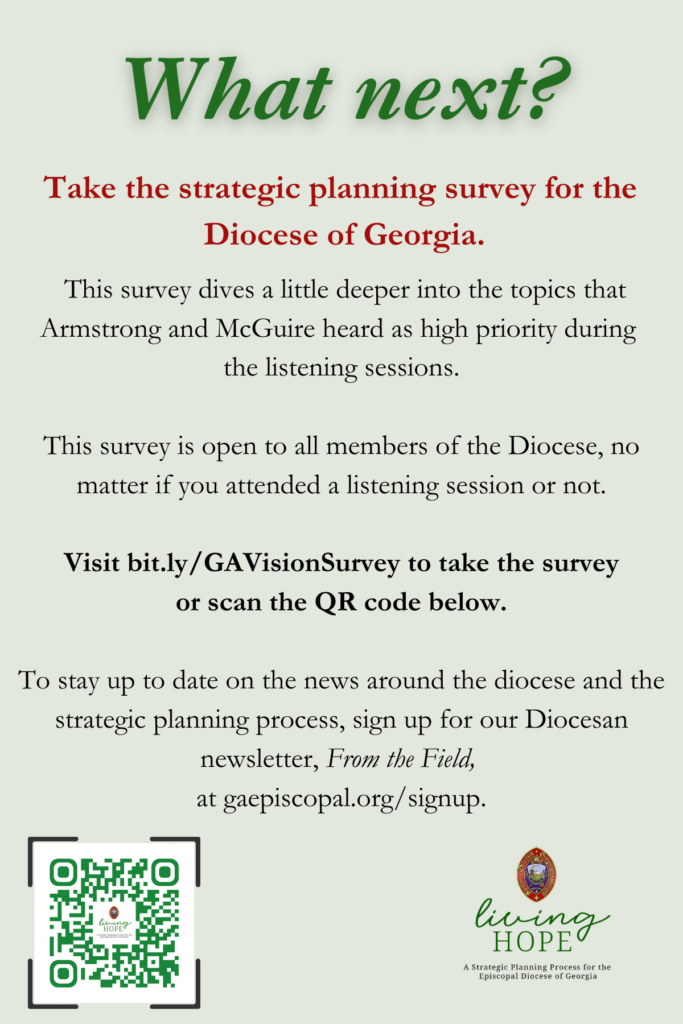 We are receiving surveys now through October 31 for our strategic planning process. Take the survey online here:
 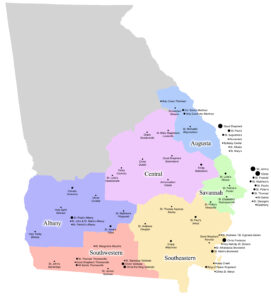 Strategic Planning Committee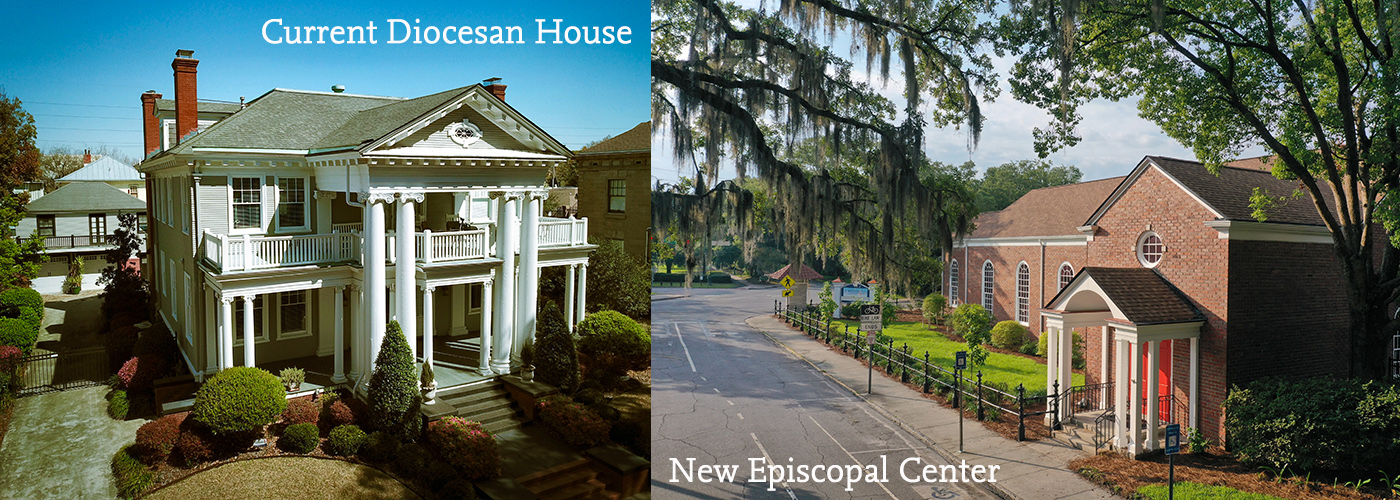
 Sean said, “And finally, what about our idolatry of structures and practices that exclude and diminish our witness? We have to get it together. That’s going to mean laying some things down.” By the end of the day, an announcement went out to the church that our Presiding Bishop-Elect
 The gift nestled in our propers for this commencement is clarity that while we long to see lives changed by the Good News of Jesus, that